Millions Recovered in New York Injury Cases Over 35 Years
Every file is prepared for trial — whether or not it gets there.
What Does Full-Cycle Personal Injury Litigation Actually Look Like in New York?
New York personal injury litigation is not a form letter and a demand. It is a sequence of highly strategic legal steps, each one building toward a number that reflects what your injury is actually worth — not what an insurance carrier hopes you will accept.
I represent people injured in severe car accidents, slip and falls, premises liability incidents, and construction accidents across New York. My job starts at the first intake conversation. It ends at a settlement that reflects full case value or, when necessary, a jury verdict.
Here is what that means in practice: every file I open gets prepared as if it will go to trial. That standard does not activate after a settlement fails. It is the baseline. Insurance defense attorneys evaluate opposing counsel before they evaluate the claim itself. When they know the attorney sitting across the table has a 35-year jury verdict history, that assessment changes immediately — and so does the settlement number.
Why Do 35 Years of New York Trial Experience Matter?
New York is one of the most demanding personal injury litigation environments in the country. The courts are congested, the defense attorneys are experienced, and the rules — spanning from comparative negligence to the statute of limitations to strict liability under Labor Law § 240 — are specific enough that the details of how a case is built matter enormously.
I have litigated personal injury cases in New York courts for over 35 years. This includes car accidents in Queens, slip and falls in Brooklyn, premises liability claims in Manhattan, and construction accidents across the five boroughs. The aggregate recovery across those cases runs into the millions of dollars. That number did not come from volume; it came from meticulous preparation.
My primary office is located at 1 W. 34th Street — exactly one block from Penn Station. Clients reach me directly by subway, bus, or NJ Transit from anywhere in the metropolitan area.
Why Does the File You Build in the First Month Determine What the Case Is Worth?
The evidentiary file you assemble in the first four weeks sets the ceiling on what the case is worth. I have seen this firsthand across decades of New York personal injury practice.
Early in my career, I took over a car accident case from a client who had been waiting six months. The prior attorney had sent a basic demand letter, but nothing else had been done. There was no accident reconstruction. No photographs of the scene. No formal spoliation letters sent to the defendants to preserve evidence. Two critical witnesses the client had identified on the day of the accident were now unreachable.
That case was highly winnable. The liability was clear: a driver ran a red light at an intersection in the Bronx and struck my client’s vehicle at high speed. My client suffered a herniated disc at L4-L5, and the surgery was documented. But the evidentiary foundation had been allowed to erode.
I rebuilt what I could. I subpoenaed the intersection’s camera footage — but there is typically a strict window of thirty days before municipal or commercial security footage is overwritten, and we were past it. I obtained the police report, the EMS records, and the hospital records, and I retained an orthopedic expert. We went to trial.
We won. But the verdict was lower than it should have been. The missing camera footage would have made the liability argument absolutely airtight. Instead, we built the case on what remained.
That case stayed with me. It is exactly why I build the evidentiary record from the very first day of representation — not from the day a settlement offer proves insufficient.
Under New York Civil Practice Law and Rules (CPLR) Section 214, the statute of limitations for most personal injury claims is three years from the date of injury. That sounds like a long runway, but it is not. Evidence degrades. Witnesses move. Security footage gets overwritten in thirty days or less. The first month is when the case is either preserved or permanently compromised.
Will You Speak With the Principal Attorney Directly?
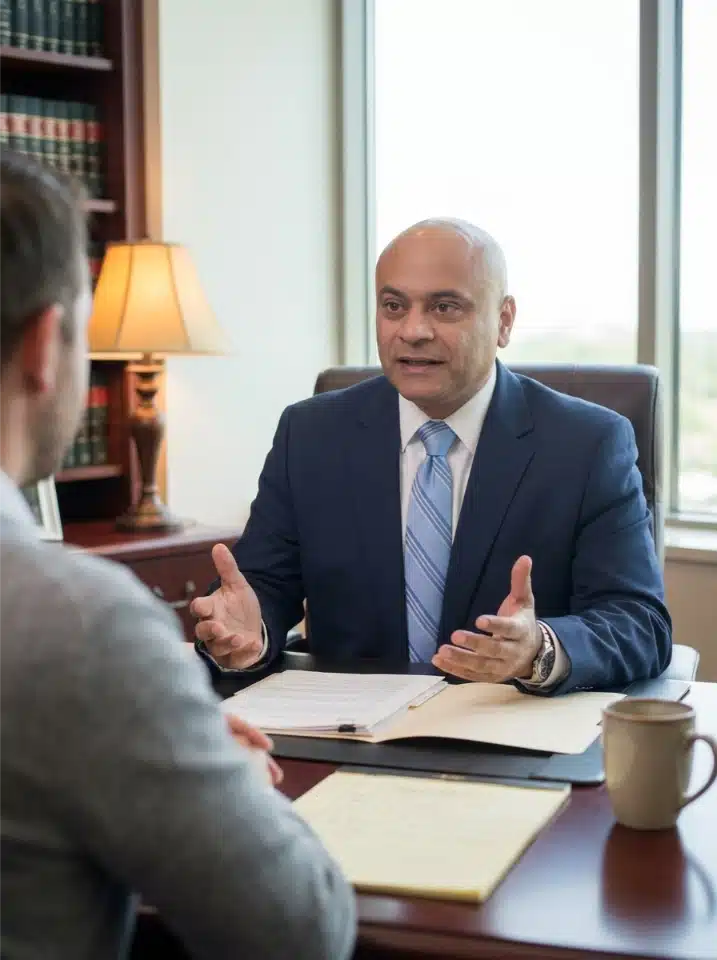
You speak directly with David Shakarchi when you call this firm. Not a paralegal. Not an intake coordinator. Not a first-year associate who will hand the file to a senior partner three months from now.
This is a boutique litigation firm. Your file is my direct responsibility from the moment we speak.
That personalized access matters at the insurance carrier level, too. Carriers track which attorneys actually try cases. When a file comes in from an attorney with a 35-year jury verdict record, the adjuster’s calculus shifts. That difference has real dollar value — often realized in the settlement phase before the case ever reaches a courtroom.

How Do We Build a New York Personal Injury Case From Intake to Trial?
Every case starts with the exact same standard: build it as though it will go before a jury. That standard does not change based on the size of the claim, the initial valuation, or whether the other side shows early settlement interest.
The execution approach includes:
- 01Immediate Evidence PreservationSpoliation letters are sent to defendants, property owners, and carriers before any material is lost or destroyed.
- 02Medical Record SynthesisFull medical record collection and review are conducted before any formal demand is issued.
- 03Early Expert RetentionWe coordinate with orthopedic, neurological, or vocational experts immediately, depending on the specific injury type.
- 04Statutory PleadingDeposition strategy is built tightly around precise liability theories from the very first pleading.
Under New York’s pure comparative negligence rule (CPLR 1411), a partially-at-fault plaintiff can still legally recover damages, reduced only by their specific percentage of fault. A well-built liability record protects your recovery even when the defense argues shared responsibility. We build the file to legally minimize that argument from the start.
What Is Our Execution Protocol for Injury Claims?
How Do We Evaluate the Case From the First Conversation?
The first call with a new personal injury client covers three critical things. First, the facts of the accident — what happened, when, where, and who was involved. Second, the injury — what was diagnosed, what treatment has been received, and what the current medical status is. Third, the timeline — when exactly the injury occurred and how much of the statute of limitations remains under CPLR 214. If the case warrants full litigation commitment, we open the file and begin the evidentiary build that same week.
How Do We Build the Record and Manage the Litigation?
Case types handled include car accidents, slip and falls, premises liability, and construction accidents under New York Labor Law §§ 240 and 241. Each carries its own strict evidentiary requirements and procedural demands. Partial fault is only a defense if the record allows it; early expert retention and careful deposition strategy minimize that exposure.
How Do We Evaluate Settlement Offers Against Trial Value?
Every settlement offer is evaluated against a specific metric: the realistic trial value of the case, discounted only for legitimate legal risks such as liability uncertainty or witness credibility. If an offer does not reflect that accurate range, we simply do not accept it. When a case goes to trial, I personally handle the courtroom. Voir dire — the critical jury selection process in which each side evaluates potential jurors — is something I have executed hundreds of times in New York courts.
Which New York Neighborhoods and Boroughs Do We Serve?
We handle personal injury cases across all five New York City boroughs and the surrounding metropolitan area. This includes clients from Manhattan, Brooklyn, Queens, the Bronx, and Staten Island. We also represent clients from Long Island and New Jersey whose accidents occurred in New York or whose cases are governed by New York jurisdiction. The 34th Street office is highly accessible from every direction.
Are You Ready to Discuss Your New York Injury Case?
The very first step is a direct, confidential conversation with the attorney who will handle your case. Call 888-414-6685 or email info@lawpracticeusa.com. The office is located at 1 W. 34th Street, Room 601, New York, NY 10001 — exactly one block from Penn Station. Tell us what happened. We will tell you exactly what your case involves and what must happen next to protect your rights.
You reach David Shakarchi directly — not an intake coordinator.
info@lawpracticeusa.comFrequently Asked Questions About New York Personal Injury Law
How long does a personal injury case take to resolve in New York?
Most New York personal injury cases take one to three years from filing to resolution. Straightforward cases with clear liability and well-documented injuries settle faster. Complex cases — involving multiple defendants, disputed liability, or serious permanent injuries — take longer and often require trial. David Shakarchi builds every file for trial from day one. That level of preparation frequently shortens negotiation timelines because insurance carriers know the case is actually ready for a courtroom.
What does it cost to hire a personal injury attorney in New York?
Personal injury representation in New York is handled on a strict contingency fee basis. You pay absolutely nothing upfront. The attorney’s fee is a percentage of the total recovery, which is only collected if the case resolves in your favor. If there is no financial recovery, there is no attorney fee. This structure ensures David Shakarchi’s financial interests are perfectly aligned with yours from the first conversation.
My injury happened partly because of something I did — does that end my claim?
No. New York strictly follows a pure comparative negligence rule under CPLR 1411. Partial fault reduces your recovery — it does not eliminate it. For example, if a jury finds you were 20% at fault for an accident, you can still legally recover 80% of your total damages. A well-built evidentiary record proactively minimizes the percentage of fault the defense can legally assign to you, which is why immediate case preparation matters.
What separates a trial attorney from a settlement-focused firm?
Trial attorneys prepare every single file as though it will go before a jury. Settlement-focused firms prepare files simply to negotiate. Insurance carriers track which attorneys actually try cases. When a claims adjuster knows opposing counsel has 35 years of actual jury verdict experience, the settlement offer reflects that reality. You receive a better financial number whether or not the case ever reaches a courtroom.
Which types of accident cases does David Shakarchi handle in New York?
Car accidents, slip and falls, premises liability, and construction accidents under New York’s Scaffold Law are the primary case types. Construction cases involving New York Labor Law § 240(1) or § 241(6) — covering elevation-related injuries and specific Industrial Code violations on active job sites — are handled through full trial preparation, including immediate site investigations and statutory analysis from the start of representation.
Will I actually speak with David Shakarchi, or will my case be handled by someone else?
David Shakarchi handles your file personally. This is a boutique firm. There is no intake coordinator screening your calls, nor is there a first-year associate managing the details of your case. You speak directly with the principal attorney from the first conversation through the final resolution. That direct access is how the firm operates.