Your New York Estate Moves Through Surrogate’s Court With Experienced Guidance
35 years filing probate petitions across all five borough courts.
How Does New York Probate Work and What Happens First?
After someone dies in New York, their estate cannot move without a court order.
That order comes from New York Surrogate’s Court — a specialized court that handles wills, estates, and guardianships. Under the Surrogate’s Court Procedure Act (SCPA) Section 205, the Surrogate’s Court of the county where the deceased was domiciled, or where their assets are located, maintains exclusive subject matter jurisdiction over the estate administration. Its primary job is to validate the will, appoint the executor, and authorize the distribution of assets.
Until that authorization exists, banks will not release funds. Real estate cannot be transferred. Brokerage accounts stay frozen.
The document that unlocks everything is called Letters Testamentary — a court-issued authorization naming the executor and giving them legal authority to act on behalf of the estate. No financial institution in New York will move assets without it.
If there is no will, the court follows a separate process called intestate succession — the legal rules governing who inherits when someone dies without a valid will. In that case, the court issues Letters of Administration instead.
Probate is not optional. And it does not start itself.
Why Does 35 Years of Filing Experience Across New York’s Surrogate’s Courts Matter?
David Shakarchi has filed probate petitions across New York for over 35 years.
That includes Manhattan, Brooklyn, Queens, Staten Island, and the surrounding counties. Every one of those courts operates under the same statutory framework governed by the SCPA — but each one also has its own local rules, its own staffing levels, and its own processing norms.
Here is something most people do not know before they file: the exact same petition that moves through Richmond County (Staten Island) in three months can sit in Kings County (Brooklyn) for a year. Not because something went wrong. Because the docket is heavier and the local requirements are stricter.
Knowing which court you are in — and what that specific court expects — changes how the petition is prepared and how long the family waits.
The firm’s office at 1 W. 34th Street in Midtown Manhattan sits within direct reach of every borough’s Surrogate’s Court, including the New York County Surrogate’s Court located at 31 Chambers Street. Clients from Manhattan, Brooklyn, Queens, the Bronx, and Staten Island all file in different courts. All of them work with David directly.

What Freezes a New York Estate — and What Unlocks It?
“A family calls after a parent dies, and the first question is always the same.” — David Shakarchi
Families have typically already been to the bank. The bank told them the account is frozen. Someone mentioned Surrogate’s Court and they wrote it down but did not know what to do next. Here is what actually happens in those first weeks.
A family member — often the person named as executor in the will — realizes that being named in a document means nothing until a court confirms it. The will is not self-executing. The executor has no legal authority to touch estate assets until the Surrogate’s Court formally issues Letters Testamentary.
To achieve this, a probate petition must be filed. The petition includes the original will, a certified death certificate, and identifying information for every interested party — every heir, every beneficiary, every distributee. Then the court issues a citation — a formal legal notice that must be served on those interested parties before the court can act.
Here is where localized procedural knowledge is critical. When all interested parties sign a waiver of process, the court does not need to wait for the citation return date. The proceeding moves significantly faster. An experienced attorney identifies this opportunity at the outset.
A single unidentified distributee, or a supporting affidavit that does not match a county’s highly specific formatting requirement, can delay a petition by months. The difference between a petition accepted on first submission and one returned for correction is not minor. In Kings County, a returned petition can cost an estate four to six months of lost time.
What Can You Expect When You Work With This Firm?
You will speak directly with David Shakarchi — not a paralegal, and not an intake coordinator.
That is how this law firm has operated for over 35 years. When you call 888-414-6685 or email info@lawpracticeusa.com, you reach the principal attorney. When your file is being processed, the attorney is working on it.
A common concern in estate matters is the anxiety of not knowing what is happening. You filed. You are waiting. Is that normal for your county? Did something get rejected? Is someone supposed to call you?
At this firm, you will know. David tracks the status of every petition filed and communicates exactly what the court’s timeline means for your specific situation — including whether anything has been returned and why.
For families with Israeli assets in the estate, that clarity extends to both sides of the process. Israeli bank accounts and real estate require a separate inheritance proceeding in Israel. Under Section 136 of the Israeli Inheritance Law, Israeli courts maintain jurisdiction over these assets. Utilizing his dual licensing and bilingual capabilities, David handles the Israeli legal procedures directly. There is no need for a referral to a separate foreign firm.
How Do We Handle a New York Probate Petition From Filing to Letters Testamentary?
Every probate petition follows the same sequential legal path — but no two estates are identical.
Here is the standard process at this firm:
- 01Initial assessmentWe review the will, identify all interested parties, confirm the assets in the estate, and determine which county Surrogate’s Court has proper jurisdiction under SCPA 205.
- 02Petition preparationWe draft the probate petition, formatting the will, death certificate, and all required supporting documents strictly to the specific county’s local rules.
- 03Citation and waiverWe identify whether interested parties will sign waivers of process or if formal citation service is required, managing the procedural flow accordingly.
- 04Court filing and intakeWe file the paperwork with the Surrogate’s Court and actively monitor the docket for any return or deficiency notices.
- 05Letters TestamentaryOnce the court admits the will to probate, we obtain the authoritative Letters Testamentary granting the executor legal power to act.
- 06Ongoing administrationFor clients who need continued support, we guide the executor through asset marshaling, creditor notification, tax filing obligations, and final distribution.
New York’s executor commission is set by statute under SCPA § 2307. It is calculated as a specific percentage of the estate’s value. We clearly explain this statutory calculation to every executor before administration begins.
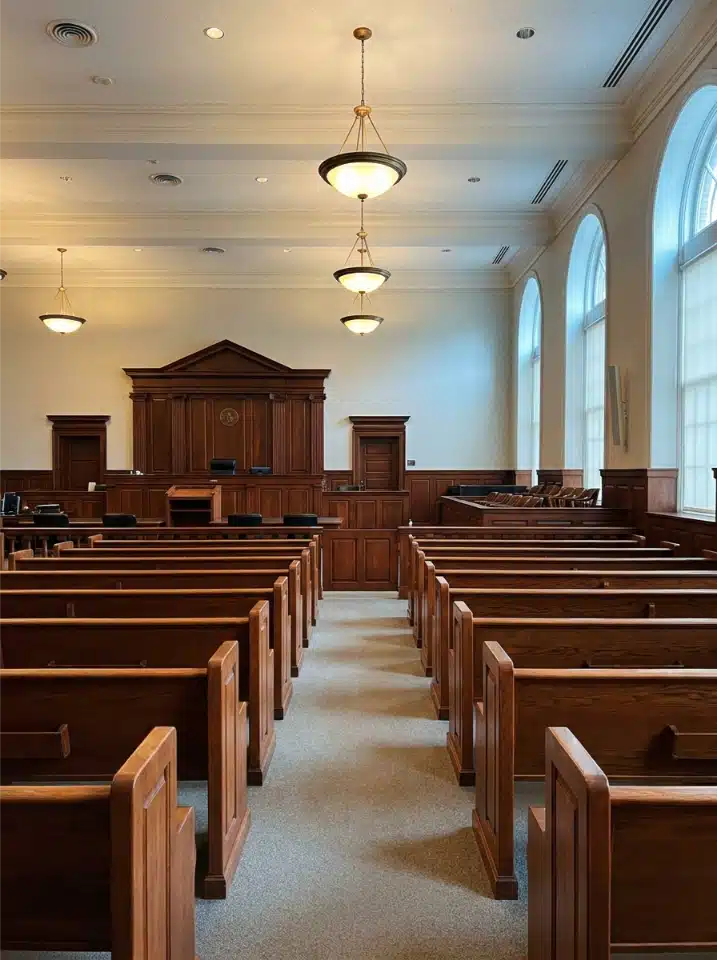
How Do County Surrogate’s Courts Differ in New York?
The county where the decedent lived or owned assets determines which Surrogate’s Court maintains subject matter jurisdiction.
New York County (Manhattan) and Kings County (Brooklyn) carry the heaviest probate dockets in the state. Uncontested estates in these courts routinely take longer to process than in outer counties. We factor this into how we sequence the filing, when we follow up, and what we advise clients to expect.
Richmond County (Staten Island) processes uncontested estates more efficiently. A petition filed there, properly prepared, moves at a faster pace. We account for that when advising clients on realistic timelines.
Queens County and Bronx County fall in between. Each requires its own administrative nuances — specific affidavit formats, cover sheet conventions, and local filing norms that differ from what Manhattan or Brooklyn expects.
One critical planning detail worth knowing upfront: New York imposes its own estate tax with an exemption currently near $6.94 million. Estates that exceed 105% of that threshold are taxed on their entire value — not just the excess. This New York estate tax cliff catches families off guard. We flag it early and coordinate with a tax professional when estates approach that range.
If the decedent was a non-domiciliary individual passing away with assets located in New York, SCPA 205 dictates that the Surrogate’s Court where those assets reside holds jurisdiction. For foreign heirs (such as Israeli residents) seeking to release Manhattan bank accounts or real estate, our firm handles the complex procedures of filing a Petition for Ancillary Letters of Administration (Form AA-1), submitting authenticated copies of foreign domiciliary records, and drafting the required foreign law affidavits. A separate proceeding runs in Israel for any assets located there, and both jurisdictional processes run concurrently through our unified representation.

Which New York Counties and Boroughs Do We Serve?
This firm serves estates filed across New York City and the surrounding region.
We handle Surrogate’s Court matters in Manhattan (New York County), Brooklyn (Kings County), Queens, the Bronx, and Staten Island (Richmond County). We also assist clients with estates that include assets in Nassau, Suffolk, Westchester, and Rockland counties.
For estates that span New York and New Jersey — or New York and Israel — we handle all jurisdictions under a single, unified representation.
Are You Ready to Open a New York Estate? Here Is How to Start
The process starts with a direct, confidential conversation — no forms, no intake coordinators.
Call David Shakarchi at 888-414-6685 or email info@lawpracticeusa.com. Tell us which county the estate is in, whether there is a valid will, and what assets are involved. That is enough to start.
David will assess the legal reality of the situation personally and outline the immediate next steps. If you need to be in Surrogate’s Court, you will know exactly which one and why. If there is a faster path, you will know that too.
You reach David Shakarchi directly — not an intake coordinator.
info@lawpracticeusa.comFrequently Asked Questions About New York Probate
How much does it cost to probate a will in New York?
New York Surrogate’s Court filing fees are calculated based on the gross value of the estate’s personal property. Attorney fees vary by estate complexity — straightforward uncontested estates often qualify for flat-fee arrangements. Executor commissions are set by statute under SCPA § 2307, calculated as a percentage of estate value. Cross-border estates involving Israeli assets carry additional costs. David Shakarchi explains the full cost structure before any engagement begins.
How long does probate take in New York?
The timeline depends heavily on which county Surrogate’s Court handles the estate. Staten Island often resolves uncontested estates in three to four months. Brooklyn and Manhattan typically run six months to a year. Missing documents, unlocated heirs, or contested claims extend any timeline. David accounts for county-specific norms when providing realistic estimates — not a generic range that ignores where your estate is actually filed.
What happens if not all heirs agree to sign a waiver?
The court proceeding still moves forward — it just takes longer. When heirs won’t sign a waiver of process, the court requires formal citation service and sets a return date before admitting the will to probate. That process adds weeks or months depending on the county’s docket. David manages the citation process directly and advises whether waiver outreach is worth pursuing before filing.
Why does it matter which attorney files the probate petition?
Each New York county’s Surrogate’s Court has specific local formatting rules, cover sheet requirements, and affidavit conventions. A petition returned for correction in Kings County can cost four to six months of delay. David Shakarchi has filed petitions across all five borough courts for over 35 years and structures each petition to the exact court’s local requirements before the first submission.
Can the estate be opened if the will is old or the death happened months ago?
Yes — New York imposes no hard filing deadline to probate a will in most cases. Delays create practical complications: frozen accounts accumulate fees, creditor claims may go unaddressed, and real estate cannot be transferred. Starting sooner reduces those risks. David can assess the current status of the estate and identify what steps are needed regardless of when the death occurred.
Do I need a separate attorney if the estate also includes Israeli assets?
No. David Shakarchi handles both the New York Surrogate’s Court proceeding and the Israeli estate proceeding under a single representation. Israeli assets require a separate filing to establish jurisdiction under Section 136 of the Israeli Inheritance Law — that process runs parallel to the New York probate, not after it. Clients do not need to find a second attorney in Israel or coordinate between two firms.